When it comes to winter riding, it’s hard to overstate how effectively heated gloves extend your ability to safely and comfortably control your motorcycle. I realize many modern motorcycles—certainly most new BMWs—are equipped with heated grips, but grips only go so far by warming your palms. That wind whipping across the back of your hands saps heat quickly, even through your most thickly insulated gloves. To ameliorate my frozen hands while riding, I decided to purchase a pair of battery-powered heated gloves to use this winter and went with a pair from Savior Heat.
TLDR: Based on my real-world experience using Savior Heat’s 7V rechargeable heated gloves on a vintage motorcycle, they are a decent value for the cost (between $100-150) and a handy bit of kit for anyone whose bike is not equipped with heated grips and weather protection. I expect to use them regularly this winter (2025-26).
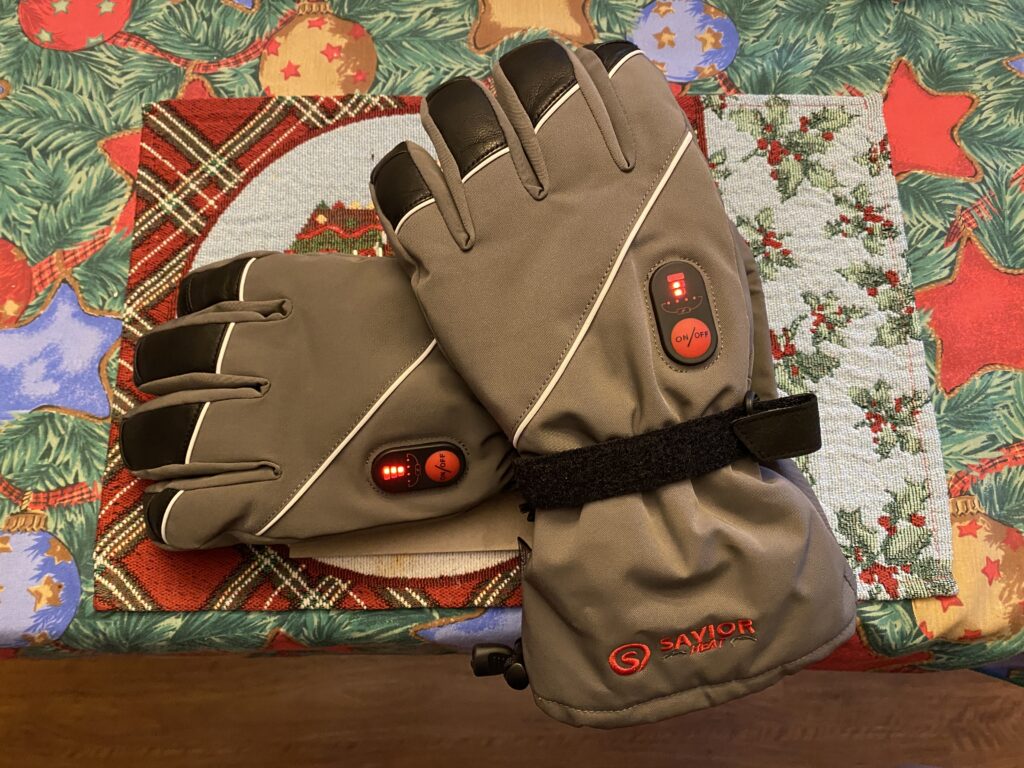
Why I chose battery-powered heated gloves: Bikes from the 1960s and ‘70s, as I’m sure you’re aware, did not come equipped with heated grips. There are some aftermarket solutions (like Oxford Heated Grips), but if you haven’t upgraded the charging system on your beloved classic—or if it’s got a six-volt system—then running heated anything isn’t an option. When I started riding a 1976 R 90/6 back in January 2025, I simply dealt with the cold when I rode. Unfortunately, it meant I went on shorter rides less often than I’d have liked and often had to pause mid-ride (planned or not) to warm my frozen fingers.
As winter levelled its icy grip on us at the end of 2025, I found myself with not one but TWO vintage bikes—one of them with a 1966 R 60/2 with its stock six-volt electrical system. While I have upgraded the charging system on my R 90/6, I only own a heated jacket liner—not heated gloves.
What I was looking for—and what I wasn’t: I used Amazon’s abundant catalog to research various heated gloves equipped with seven-volt rechargeable batteries. My goal was to find gloves made by a company with a real website (for support and possibly spare batteries) that are at least water resistant. Because I thought I might find uses for them off the motorcycle, I started looking at gloves marketed towards skiers and snowboarders, thinking those would likely be hardy enough for motorcycling without looking like they came out of a Mad Max movie. I understood that by eschewing the armor and slide pads typically incorporated into motorcycle gloves, I was elevating my risk of injury in case of a crash, so there’s no need to write me to explain the error of my ways.
Price, sizing and the buying experience: I went with a pair of Savior Heat gloves I found on Amazon for $149.99. I ordered them in XL, but quickly found those were a bit small. Returning them through Amazon was easy, and I had a pair of XXLs in hand just a few days later. I also saved myself almost $50 by sending back the smaller pair, as the combo of size and color was on sale for a few days just before Christmas 2025. For $100, my expectations of how these gloves should perform were pretty low, so I was pleased when they turned out to work pretty well for what I was asking them to do. Worst case, if they turned out to be unsuited for motorcycle duty, I could use them for cold-weather outdoor events and probably enjoy them quite a lot.
How I use them in real-world riding: In the few weeks I’ve been using them, they’ve proven up to the kind of riding I do most often—around town, short jaunts on the freeways to get to some event or meeting, grocery runs and the like. I’m not sure long-distance riders would like them as much simply due to the fact that they’re battery-powered and must be periodically recharged. Early-morning commuters without fairings on their bikes will no doubt benefit from recharging them while at work.
Why I chose ski gloves instead of motorcycle gloves: Despite my list of requirements, I did think hard about trying Savior’s motorcycle gloves, but because I prefer to tuck my glove gauntlets inside my jacket sleeves, I stuck with the skiers’ gloves, which have the buttons and power readout on the back of the hand. The motorcycle-oriented gloves move those features to the gauntlet, which would require me to always have them outside my jacket sleeve. It’s a small thing for sure, but knowing how you prefer to wear your gear can often influence your purchasing decisions.
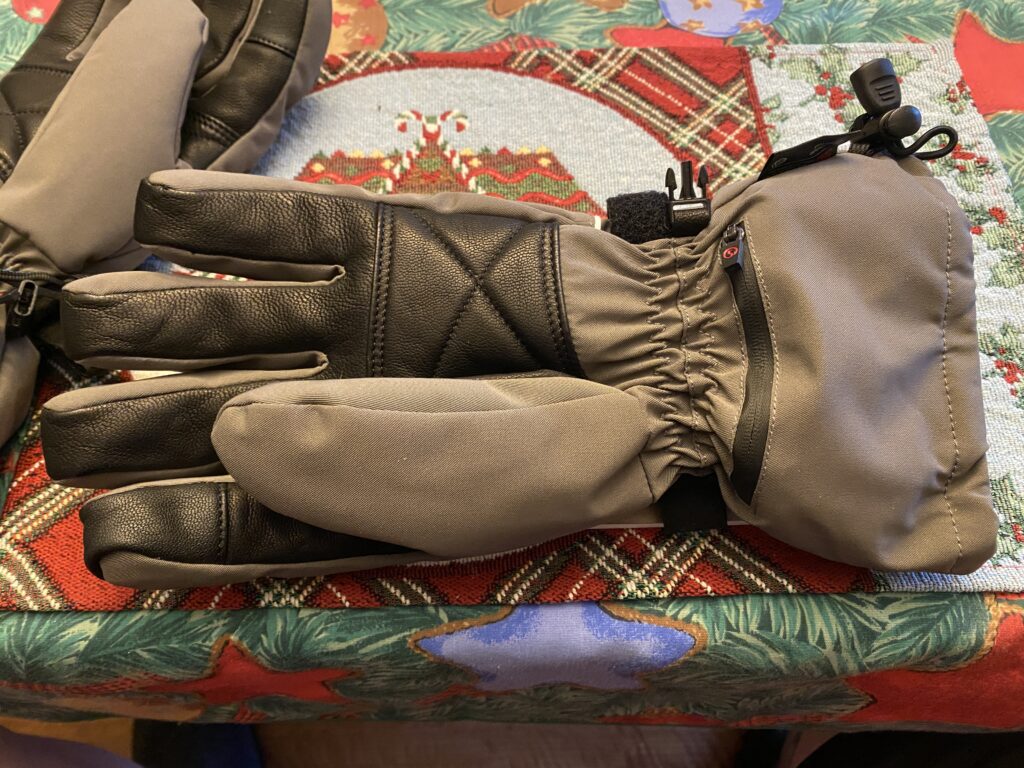
Fit, dexterity and control feel on the motorcycle: The fingers have a nice curve to them—I assume it’s meant for ski poles, but a motorcycle grip isn’t that different, so they work well. Dexterity remains good at temps into the 30s—I haven’t ridden colder than that yet—and the only difficulty I encountered was in tucking in the cuff drawstring on the second glove I put on. I have this issue with my other winter gloves, so it’s not a detriment in my book, it’s simply a function of thicker-fingered winter gloves. Grip feel is adequate and I had no problems operating the buttons and controls on the bike; keep in mind that my R 90/6 has only a few buttons or switches and they are all relatively large.
Construction, materials and weather protection: The construction is typical for gloves of this type—even motorcycle gloves. Working from the inside out, you’ll find 3M Thinsulate for non-heated warmth and a HIPORA membrane to add a layer of protection from water and wind incursion. The palms and undersides of the fingers are made of goatskin, with the rest of the gloves made of synthetic fabrics. The gloves cinch at the wrist with a Velcro strap and have an elastic drawstring to close the cuff over your arm or jacket sleeve.
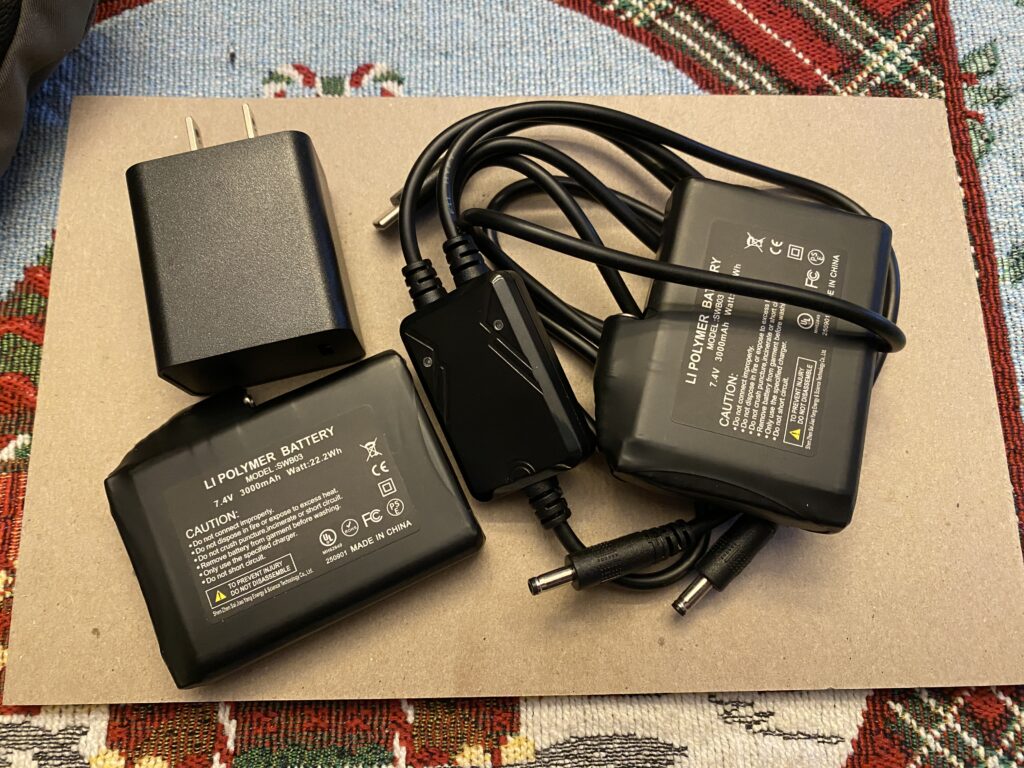
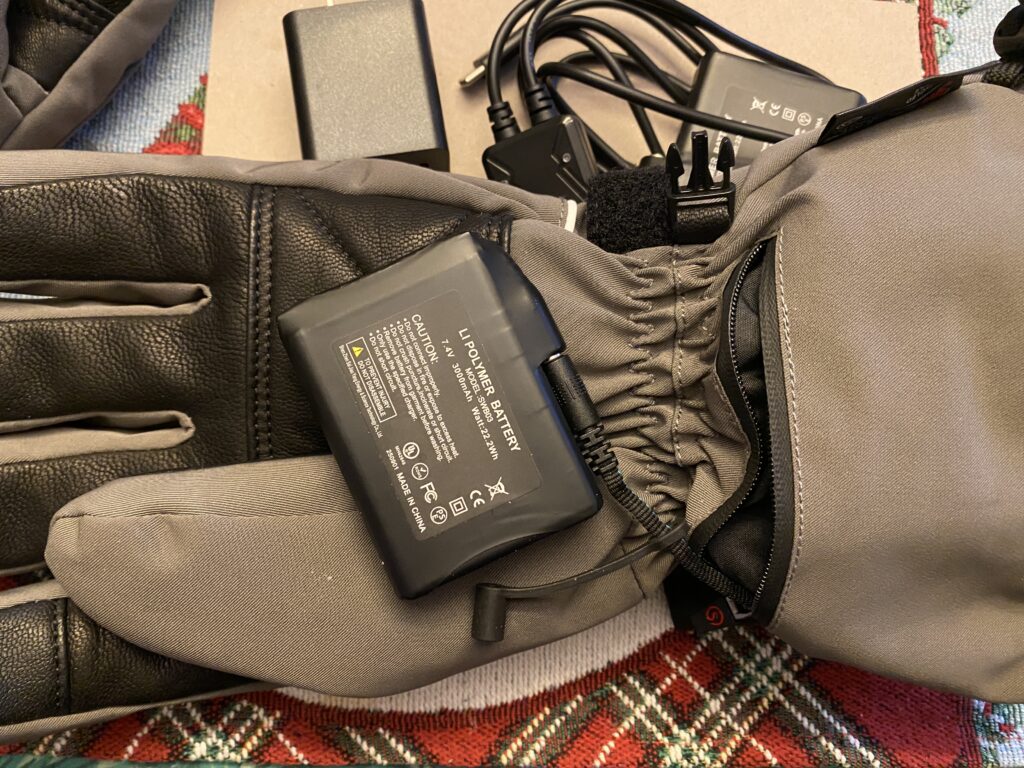
Battery design and charging details: The seven-volt battery plugs into a cord hidden in the bottom of the cuff; a waterproof zipper should keep everything secure and dry in most conditions. A nice touch is the included cap for the battery cable should you be using the gloves without the batteries plugged in. That should help prevent corrosion if any water does get into the system. The cable looks durable enough to withstand a good number of plug/unplug cycles.
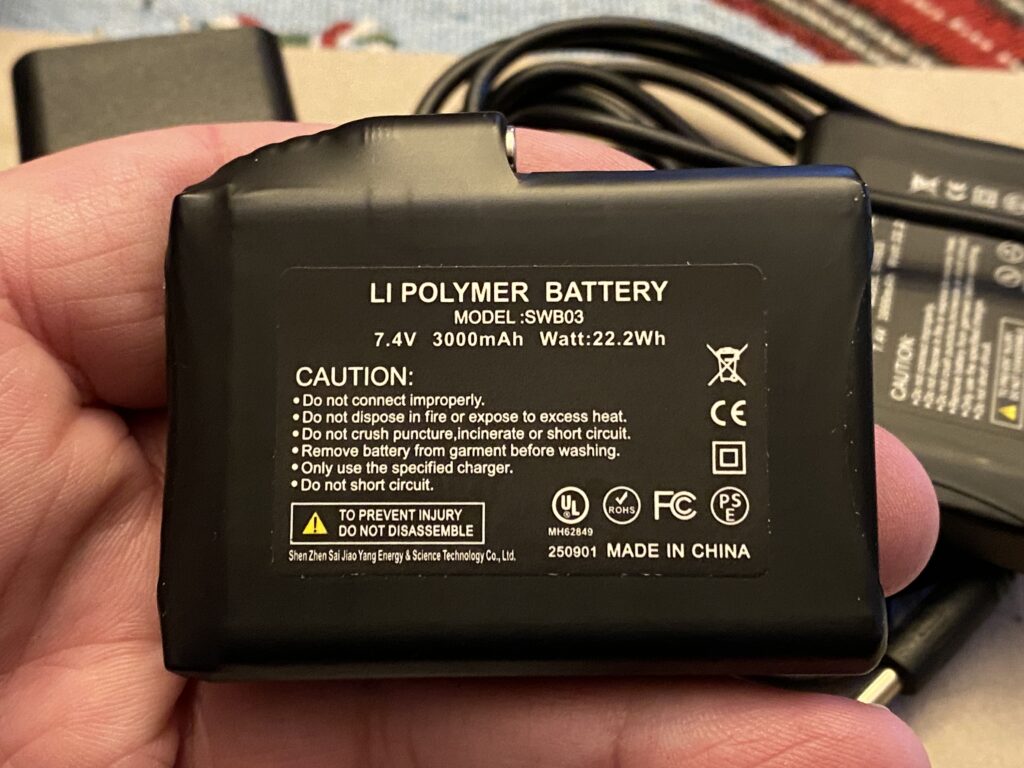
The batteries, though small and flat, are dense and surprisingly heavy. Once you’ve got them installed and are wearing the gloves, the weight more or less disappears, but over the course of a long day of riding, I did notice a bit of extra wrist fatigue that I’m attributing to the extra weight. The manufacturer recommends charging the batteries overnight before first use, but I found my batteries were fully charged right out of the box. I still left them on the charger overnight because I follow instructions.
Heating levels, glove controls, battery life and overall performance: Upon first powering up the gloves with a two-second long press, they initiate in High. A nice feature is that they’ll stay on High for five minutes, then default to Medium until you turn them off. This gives you a good blast of initial heat, then balances it with longer battery life at the lower setting. The downside is that if you want them on High, you have to cycle through all the settings with short presses until you’re back on High. Turning the power off requires another two-second long press.

Savior claims the batteries will output about 140° F (60° C) for up to three hours on High, about 122° F (50° C) for up to six hours on Medium and 113° F (40° C) for up to 10 hours on Low. I found their estimates for time accurate on High and Medium over the course of two weeks of riding in which I kept careful track, but keep in mind that’s with brand-new batteries and usually riding steadily for no more than 60-90 minutes at a stretch. At temperatures in the low 40s Fahrenheit, I found the Low setting inadequate, but I’m sure it would be useful on warmer rides. Savior says that lower external temperatures will affect how long the batteries last, but they don’t say at what temperature they tested the gloves to get their longevity estimates. I never drained the batteries completely in one day of riding when using primarily the Medium setting.
To be honest, I might not bother using the gloves on the Low setting—they are well insulated and on rides with temps in the 50s, I didn’t find myself wanting to turn on the heat. My typical riding isn’t long, sustained blasts on the freeways, but rather running errands around town or just riding for fun on back roads and US highways.
The buttons are easy to press with the gloves on and the readout is easy to view in any light. When you turn the gloves on and any time you change the High/Medium/Low setting, you’ll get a flash of estimated battery power remaining with a four-LED indicator. Four lights means 100% power, one means 25% power.
Savior warns you to remove the batteries from the gloves to charge them and to make sure you fully discharge and then charge the batteries once every three months to ensure they last as long as they can. I’m sure I’ll forget to do this over the summer, so it’s good to know I can buy a set of replacement 3000mAh lithium polymer batteries from their website for $53. The included charger is easy to use and will charge both batteries at the same time with the proprietary USB-C cable. I found it takes between five and six hours to charge the batteries when they’ve been used down to 25% power or less.
The gloves themselves are comfortable for all-day use, though I’m more used to gloves made for motorcyclists that don’t have quite so much insulation on the palms and bottoms of the fingers. Given the look of Savior’s motorcycle gloves, I’m not so sure they’re different than these snowboarders’ gloves in that respect, though.
Durability expectations and long-term value: Savior’s products are all made in China, which is no doubt why the cost is so low, though buying them direct from the website appears to be less costly than buying them through Amazon unless (like mine) they’re on sale when you get them. I have not had great experiences with Chinese-made gloves specifically lasting more than a couple of seasons, so my advice is to keep an eye out for the price drop and buy them as cheaply as you can. If they don’t last longer than one winter, I feel I’ll have gotten my $100 worth out of them.
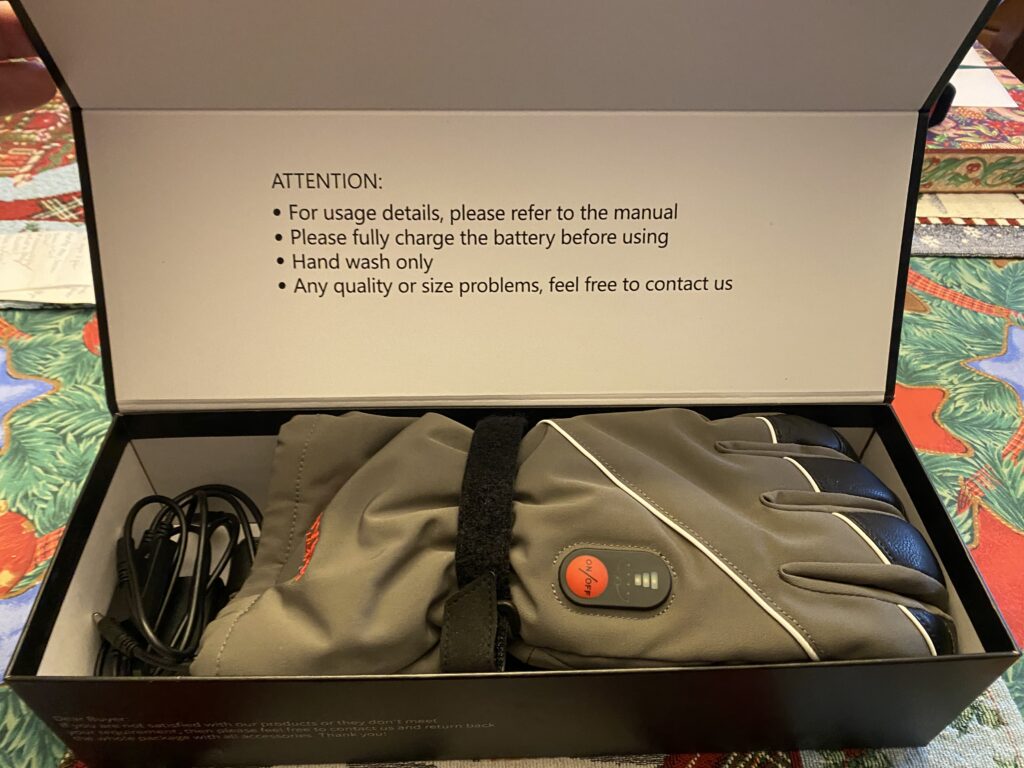
Other products, where to buy and warranty information: They have other gloves available, including ones that can be adjusted via Bluetooth. They also have gloves marketed towards hunters, mittens and a variety of glove weights for people who might not need to go skiing or ride motorcycles. Colors are limited depending on the model, with a lot of black filling out the catalog. I was lucky that the ones I wanted were available in gray or white; the gray were less expensive. It looks like most of their bulkier offerings—like the gloves I bought—come with a nice box. I typically toss these boxes into the recycling bin, but the box actually makes a nice way to store these gloves when they’re not being used, so I may hang on to the box for a while longer.
Visit saviorgloves.com for more information or to purchase direct. Also available on Amazon, which I recommend for both their occasional lower prices and ease of returns/exchanges. Since I bought the wrong size first and had to return them and buy the next bigger size, I found that returning them was quite easy and the refund for my incorrect purchase was processed in just one business day. I’m not sure it would have been that easy had I purchased direct from the website despite their promise of a 30-day return/exchange window.
Savior gloves come with a 180-day limited warranty on the batteries and heating elements.